
Estimated reading time: 10 minutes
What comes to mind when you hear “robot”?
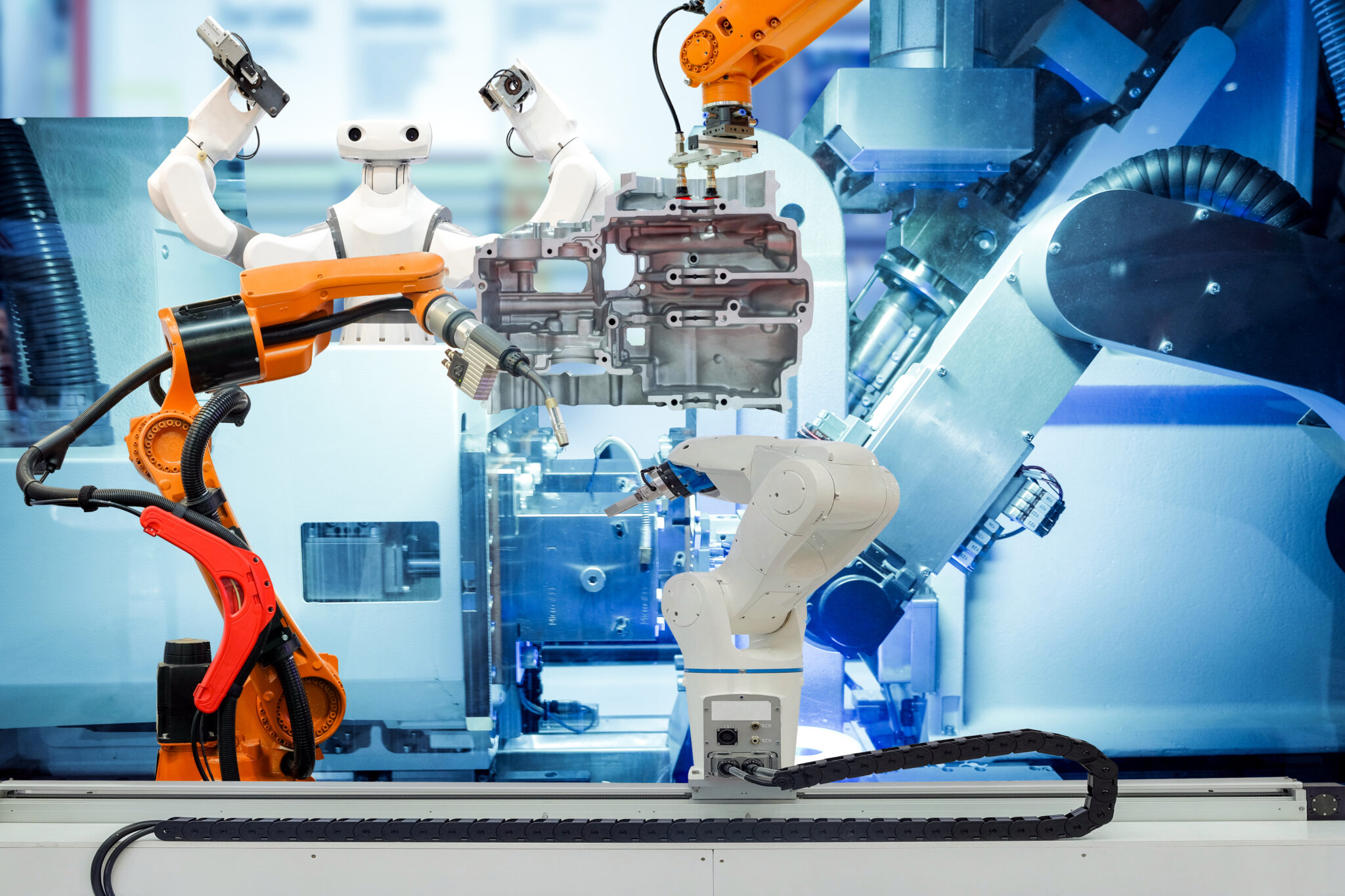
Many people picture humanoid machines or AI‑powered devices. In reality, the robots that matter most in everyday industry are industrial robots. They operate across manufacturing and many other fields.
This article explains what industrial robots are, introduces the main types and their key characteristics, and shows how they’re used on real shop floors.
1. WHAT IS AN INDUSTRIAL ROBOT?
An industrial robot is an “automatically controlled, reprogrammable multipurpose manipulator, programmable in three or more axes, which can be either fixed in place or fixed to a mobile platform for use in automation applications in an industrial environment“*. In plain terms, it’s a programmable mechanical arm that can be taught new tasks without physically rebuilding the machine.
- * International Federation of Robotics (IFR), Industrial Robots – Definition and Types – https://ifr.org/industrial-robots
2. THE MAIN TYPES OF INDUSTRIAL ROBOTS
Industrial robots are used across a wide range of industries, including automotive and electronics manufacturing, and can be broadly classified into several types as outlined below.
Articulated Robots
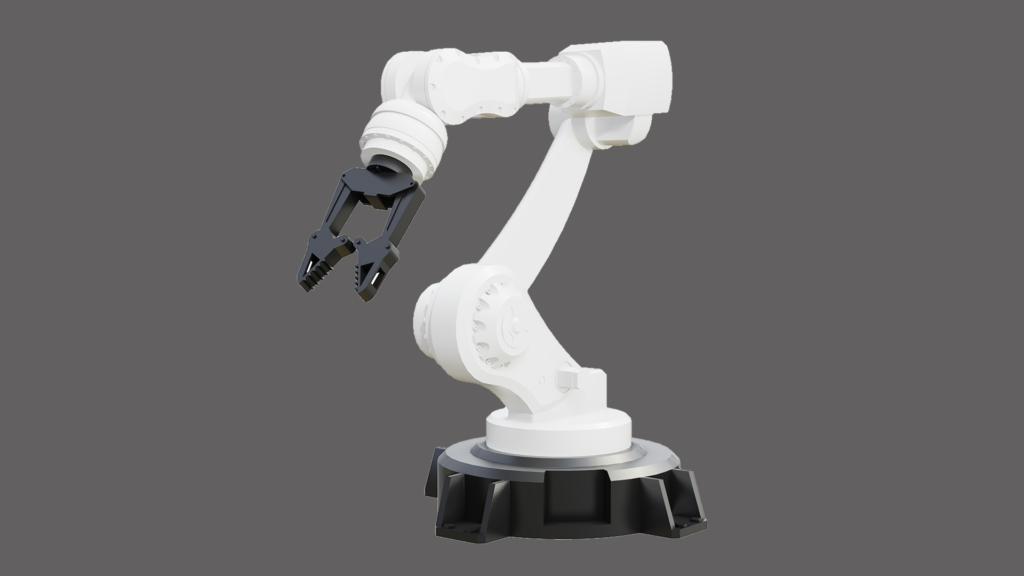
These industrial robots are designed with a structure similar to a human arm, allowing them to perform complex movements. In general, the more axes a robot has, the wider range of motion it can achieve. Most articulated robots commonly have four to six axes, although robots with seven or more axes also exist. They are used for a wide variety of tasks such as assembly, material handling, and inspection, and are the most widely adopted type of industrial robot in manufacturing environments.
- ・High degree of freedom of motion
- ・Relatively low structural stiffness compared to other robot types
- ・Robots with a higher number of axes are more complex to control
SCARA Robots
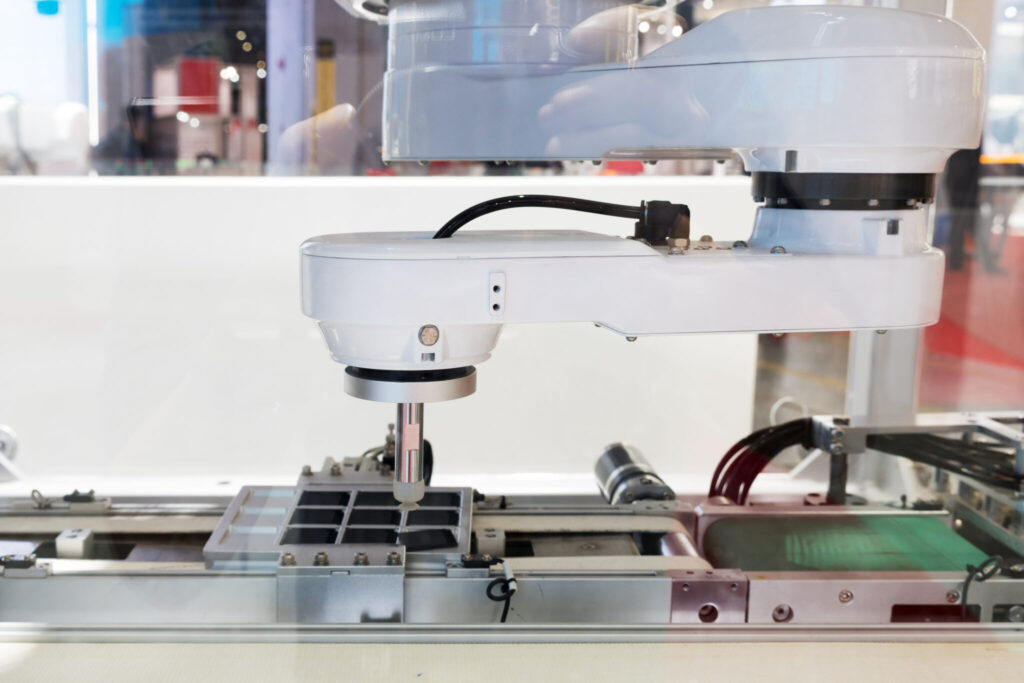
These industrial robots combine horizontal motion with vertical up-and-down movement, allowing them to perform tasks from directly above. A typical SCARA robot has four axes in total—three axes for horizontal movement, including the end effector, and one axis for vertical movement—and is commonly used for assembly applications. The name SCARA comes from Selective Compliance Assembly Robot Arm.
- ・Excellent at planar (horizontal) motion
- ・High stiffness in vertical movement
- ・Flexibility in horizontal movement
Cartesian / Gantry Robots
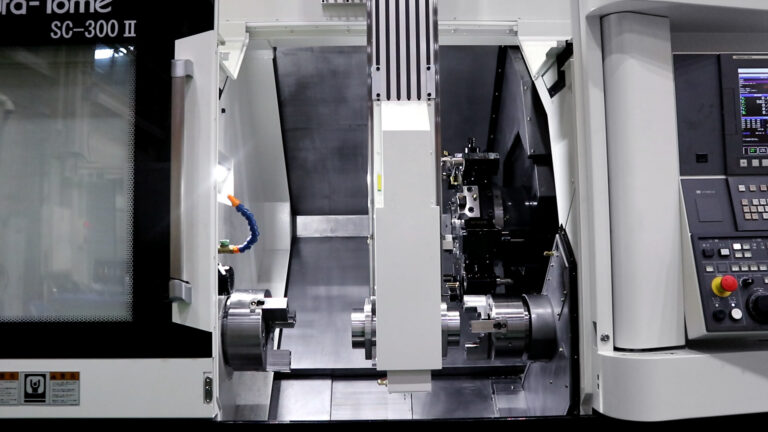
These industrial robots are composed of two or three orthogonal linear slide axes, enabling straight-line motion in vertical and horizontal directions. Because they move only along linear paths, they are less likely to motion errors during operation and can achieve high positioning accuracy. They are mainly used for tasks such as parts assembly, material handling, and inspection.
- ・Relatively low cost
- ・Simple structure with high stiffness, making them easy to operate
- ・Easy to integrate and use alongside other robots
- ・Not suitable for complex or highly articulated motions
Collaborative Robots (Cobots)
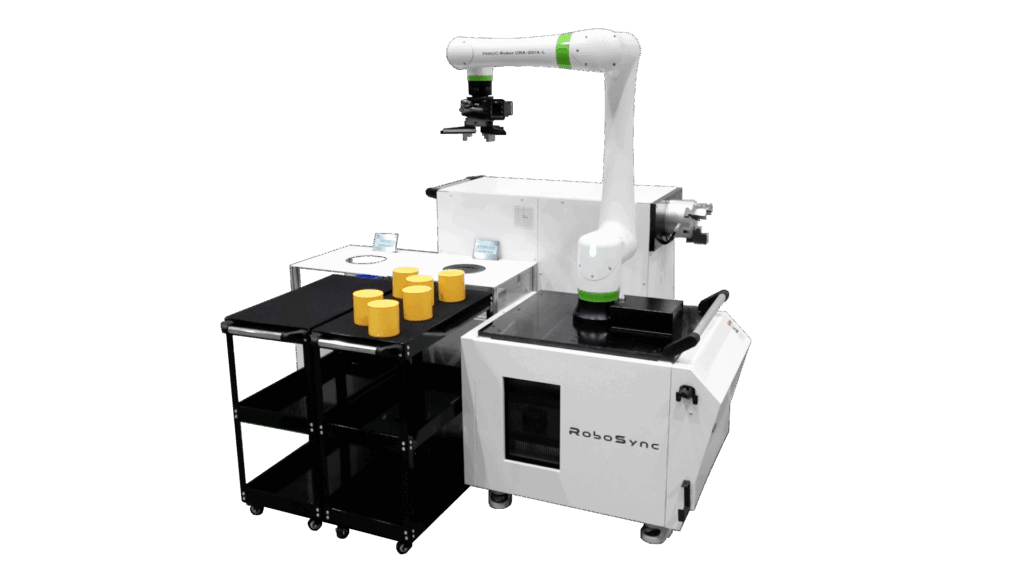
These industrial robots are designed to work with humans in the same shared workspace, rather than fully replacing them. They offer a high level of flexibility and can be applied to a wide range of manufacturing processes.
- ・High flexibility in handling different tasks
- ・Can be installed without safety fencing under certain conditions
- ・Many commercially available models are designed to be easy to use, even with limited specialized knowledge
Parallel / Delta Robots
These industrial robots use a parallel mechanism, in which multiple arms are connected in parallel to control the motion of a single point at the end effector. By moving all arms simultaneously, the robot precisely controls the position of the tool tip during operation. They are commonly used for tasks such as material sorting and alignment, as well as high-speed product picking.
- ・High stiffness and positioning accuracy
- ・Capable of certain machining and press operations
- ・Limited working range, but capable of very high-speed motion
3. KEY BENEFITS OF INDUSTRIAL ROBOTS
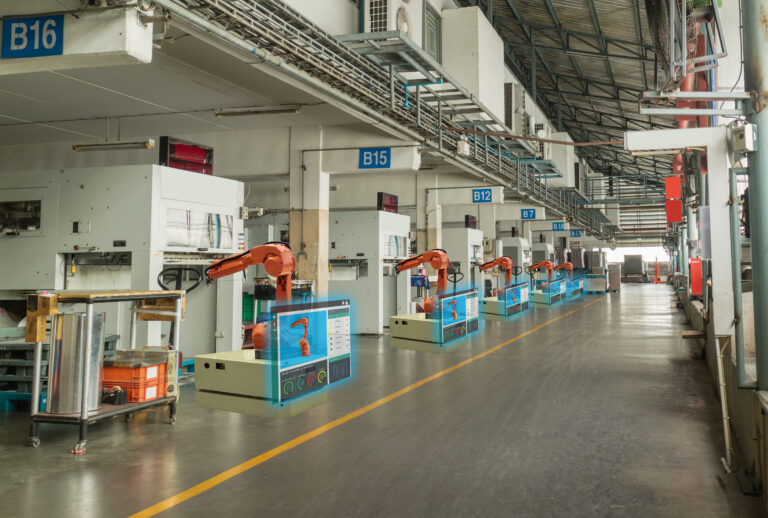
By introducing industrial robots that take over tasks previously performed by human workers, manufacturers can benefit in a number of ways, as outlined below.
Workforce optimization
By automating production processes with industrial robots, manufacturers can eliminate the need to assign operators to certain tasks, leading to workforce optimization. In manufacturing industries facing labor shortages, workforce optimization is one of the greatest benefits of introducing industrial robots.
Higher productivity and efficiency
Industrial robots can take over tasks traditionally performed by human workers, including operations that may be hazardous for people. This helps improve overall work efficiency. In addition, robots can operate continuously outside regular working hours, including overnight, enabling 24-hour operation and significantly contributing to higher productivity.
Consistent product quality
When tasks are performed manually, it is difficult for human workers to maintain a high level of concentration at all times, making it impossible to completely eliminate the risk of human error. By introducing industrial robots, such human errors can be minimized, enabling consistent and stable product quality.
Lifecycle cost control
Although the setup and initial implementation of industrial robots require a significant upfront investment, improvements in productivity and operational efficiency can lead to overall cost reduction in the long run.
4. WHERE INDUSTRIAL ROVITS ARE USED
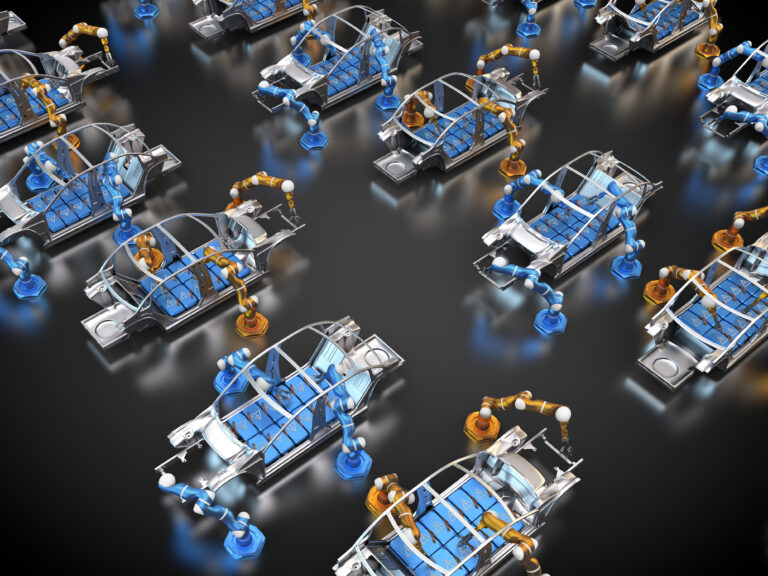
Industrial robots appear across many sectors. In manufacturing, the typical use cases include the following.
Automotive Plants
Processes such as welding, press operations, painting, assembly, and inspection often involve hazardous or repetitive work. Robots are widely adopted in these areas to improve safety and stabilize throughput. The result is safer lines and higher overall productivity.
Electronics and Electrical Equipment
With frequent model changes and a wide product mix, electronics factories use robots to standardize assembly and testing while maintaining flexibility. Robots are commonly applied to assembly, screw‑driving, dispensing, inspection, and packaging—tasks that benefit from repeatability.
Chemicals and Plastics
Where airborne hazards or harsh conditions exist, robots help reduce operator exposure. Typical tasks include handling, loading/unloading, and process transfer inside enclosures or ventilated cells.
Semiconductors
In front‑end and back‑end processes, robots support clean handling, wafer/lot transfer, and precision packaging. Continuous operation helps raise utilization and control costs in high‑throughput lines.
Industrial Machinery
Robots are frequently paired with CNC machine tools for tasks such as loading, unloading, deburring, washing, and in‑process inspection. Demand is also growing for automating upstream and downstream flows, including buffering and palletizing. This integrated approach helps improve overall equipment effectiveness
5. EXAMPLE SOLUTIONS INTEGRATED WITH MACHINE TOOLS
To illustrate how robots pair with CNC machine tools, here are two examples of machine-tool–integrated automation solutions:
Gantry Loader (e.g., GR-230 High-Speed)
A gantry robot that rapidly transfers parts in and out of a turning center to shorten non-cutting time.
Cobot (e.g., RoboSync)
Cobots are relatively easy to install and allow for flexible layouts. Designed for easy automation without large-scale systems, RoboSync seamlessly connects with a wide range of equipment—including machine tools, cleaning systems, and measuring devices—regardless of the manufacturer or NC type.
Recommended Whitepaper
Nakamura-Tome’s Automation Catalog
Discover the comprehensive world of Nakamura-Tome’s automation peripheral devices by downloading our detailed catalog.
6. CONCLUSION
In the past, industrial robots were mainly adopted by large manufacturers to support high‑volume production. Today, however, ongoing labor shortages and the shift toward high‑mix, low‑volume manufacturing are driving broader adoption across companies of all sizes. Robots are increasingly used not only to raise throughput, but also to stabilize quality, improve safety, and reduce operator dependency in day‑to‑day operations.
That said, strong results depend on disciplined implementation. The same systems that deliver major benefits can also introduce serious risks if safety management, on‑site validation, and training are neglected. Before deployment, conduct a documented risk assessment, implement appropriate safeguards, and provide practical training for operators and maintenance staff. Start with a small, well‑scoped use case, verify the results on the shop floor, and scale step by step as confidence grows.
